AI Won’t Replace Plumbers: What That Really Means for Your Child’s Future
When NVIDIA’s CEO said AI won’t replace plumbers, it wasn’t about plumbing. It was about adaptability. Here’s what the shift toward physical and hybrid work really means for your child’s future.

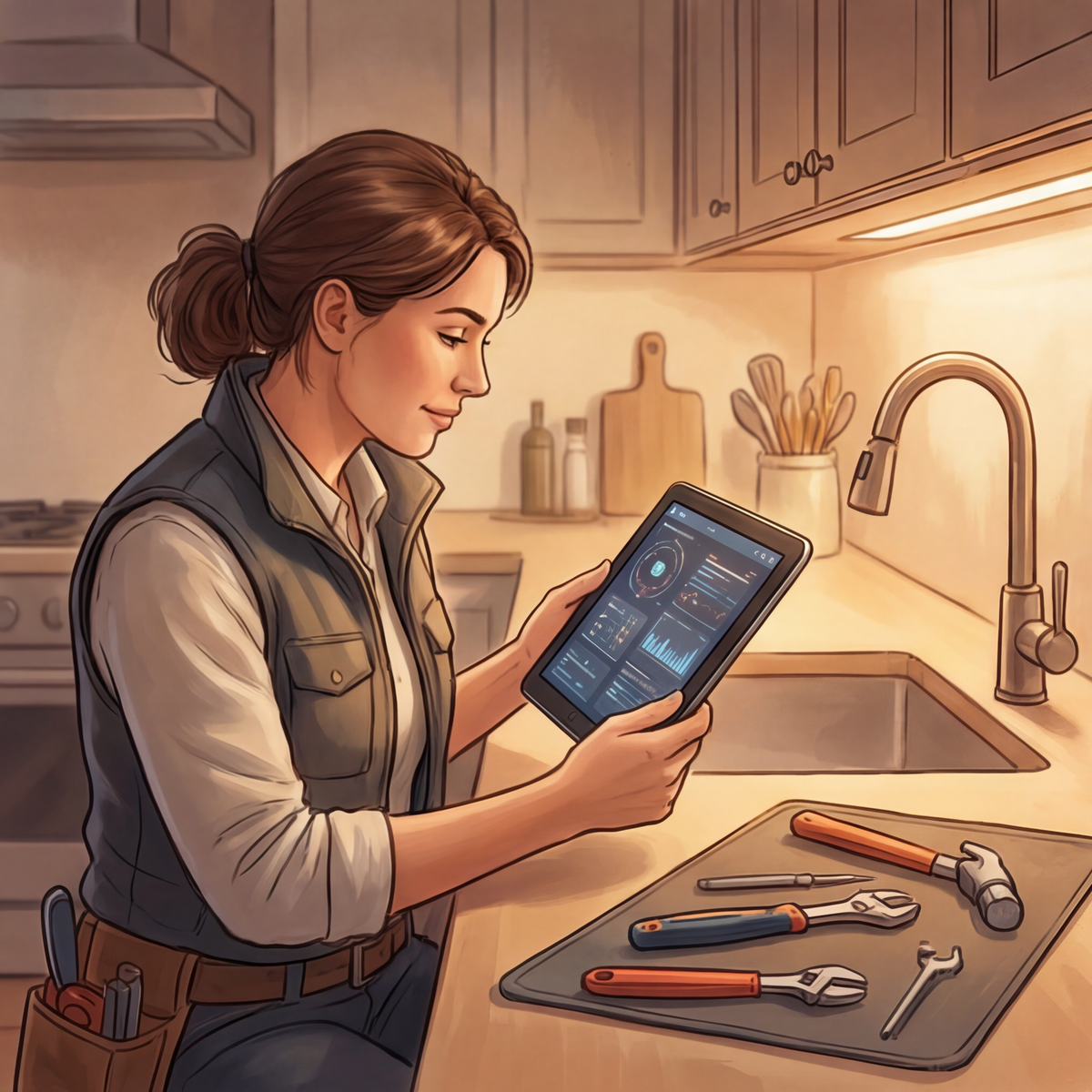
When NVIDIA CEO Jensen Huang recently suggested that AI won’t eliminate jobs — and that it might be a very good time to be a plumber — the comment sparked headlines.
Some interpreted it as a warning that white-collar work is in danger.
Others saw it as validation that skilled trades are back.
But the real takeaway isn’t about plumbing.
It’s about complexity.
And understanding that complexity may be one of the most important conversations parents have this decade.
Why This Headline Matters
For years, the dominant narrative was simple:
College degree = stable career
Office job = upward mobility
Manual labor = backup plan
But artificial intelligence is quietly reshuffling that hierarchy.
AI systems are increasingly capable of handling:
• Routine coding
• Data analysis
• Administrative coordination
• Entry-level legal drafting
• Basic design work
• Research summarization
Many of these roles were once considered “safe” white-collar paths.
Meanwhile, skilled trades like plumbing, electrical work, HVAC, and construction are facing labor shortages — and rising wages.
This shift feels counterintuitive.
But it makes sense when you look at what AI can and cannot easily automate.
The Predictability Problem
AI thrives in environments that are:
• Structured
• Pattern-based
• Digitized
• Repetitive
• Rules-driven
It excels at recognizing patterns across massive datasets.
It struggles in environments that are:
• Physically unpredictable
• Sensory-rich
• Spatially complex
• Emotionally nuanced
• Improvised in real time
A spreadsheet is structured.
A flooded basement is not.
A document review task follows rules.
A corroded pipe in a 70-year-old home does not.
The physical world is messy.
And messy environments resist automation.
The Real Advantage: Physical Intelligence + Judgment
When Huang mentioned plumbers, he wasn’t saying trades are superior.
He was highlighting something deeper:
Work that combines physical execution with judgment, adaptability, and on-site decision-making is harder to automate.
AI can assist a plumber by:
• Diagnosing common patterns
• Suggesting repair steps
• Optimizing supply logistics
But it cannot:
• Crawl into tight spaces
• Adjust force in response to material resistance
• Interpret unexpected damage
• Make embodied safety decisions
It lacks physical presence.
And that matters more than we assumed.
This Is Not an Anti-College Argument
It’s important to avoid oversimplification.
This is not:
“College is dead.”
“Trades are the only safe path.”
“Office work is doomed.”
It is a recalibration.
The jobs most vulnerable to automation are those centered on predictable digital execution.
The jobs most resilient combine:
• Strategy
• Human judgment
• Physical complexity
• Emotional intelligence
• Cross-domain thinking
This is why we explored the concept of the “Orchestrator” in The Ghost in the Cubicle — the future belongs less to typists and more to directors.
The same principle applies here.
The Trades Paradox
For decades, society subtly ranked professions:
Tier 1: White collar
Tier 2: Skilled trades
Tier 3: Manual labor
AI is flipping parts of that model.
Routine office tasks are being automated first.
Meanwhile, skilled trades — long overlooked — are increasingly scarce.
This doesn’t diminish the value of knowledge work.
It simply exposes how much of modern white-collar work was routine.
Parents who still equate “desk job” with security may need to rethink the definition of future-proof.
What Should Parents Take From This?
Instead of asking:
“Which job will AI eliminate?”
Ask:
“What kind of problems does this career solve?”
Careers most resilient to AI tend to involve:
• Unstructured environments
• Physical unpredictability
• High-stakes judgment
• Ethical decision-making
• Human coordination
The goal is not to steer your child toward plumbing.
The goal is to expand the definition of viable success.
Some children will thrive in skilled trades.
Others will combine physical skills with AI fluency.
Others will design the systems that power automation.
The common thread is adaptability.
The Bigger Shift: Hybrid Thinking
The future likely belongs to hybrid thinkers.
Children who can:
• Understand AI tools
• Direct them strategically
• Combine digital fluency with physical competence
• Solve real-world problems
• Think critically in ambiguous environments
Will have leverage.
Whether they become:
• Robotics technicians
• Construction tech specialists
• Healthcare professionals
• Automation architects
• Skilled tradespeople using AI diagnostics
The formula is similar.
Human capability + AI amplification.
The Calm Perspective
Every technological wave has disrupted assumptions.
Electricity.
The automobile.
The internet.
Each eliminated certain roles and created entirely new ones.
The difference today is speed.
The labor market is shifting while today’s children are still in elementary school.
That doesn’t mean panic.
It means preparation.
Plumbing was the headline.
The real message is this:
Careers rooted in adaptability, embodied skill, and strategic thinking are harder to automate.
The future will not belong to those who avoid AI.
It will belong to those who build capabilities AI cannot easily replicate.
And that conversation starts at home.