Beyond Coding: The 3 "Human-First" Skills Your Child Needs for the 2026 AI Economy
In 2026, learning to code isn’t enough. Discover the three human-first skills that will help children thrive in an AI-native economy.


For years, parents were told that "learning to code" was the only way to future-proof a child’s career. But in 2026, AI can write code in seconds. The goalposts have shifted. To thrive in an AI-native world, our children don't need to compete with machines at being "logical"—they need to double down on being uniquely human.
At Toddy Bops AI, we’ve identified the three "Human-First" skills that will be the true currency of the future.
1. Agentic Thinking (The "Director" Mindset)
In the past, we taught kids to be good "users" of technology. In 2026, they need to be Agents. Agentic thinking is the ability to take a complex goal (e.g., "I want to build a neighborhood recycling robot") and break it down into instructions for an AI to execute.
- The Shift: We aren't teaching them to follow directions; we’re teaching them to give directions.
- At Home: When your child has a "wild idea," don't just say "that's nice." Ask: "If you had a robot army, what’s the first thing you'd tell them to do to make that happen?".
2. Cognitive Resilience & AI Literacy
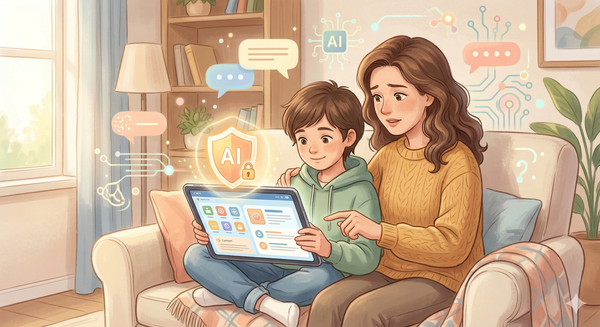
With the rise of deepfakes and AI-generated noise, "truth" is harder to find. Children need a "Mental Filter" to navigate the world without being manipulated by algorithms.
- The Skill: This is the ability to look at a piece of content and ask: "Who made this? Why did they make it? Is this 'real' or 'AImaginary'?".
- At Home: Make a game out of "Spot the AI." Look at images online together and hunt for the "AI tells"—strange shadows, extra fingers, or voices that sound just a little too perfect.
3. Transdisciplinary Creativity
The most valuable roles in 2026 are "Physical AI Specialists" and "Human-AI Designers"—jobs that blend art, ethics, and engineering.
- The Skill: The future belongs to the "Bridge Builders." A child who understands both storytelling and logic will be 10x more valuable than someone who only knows one or the other.
- At Home: Encourage hobbies that "clash." If they love drawing, try "drawing with code." If they love soccer, use AI to analyze the "physics of a goal." This cross-brain thinking is something AI cannot replicate.
The Bottom Line for 2026
We aren't raising "prompt engineers"—we are raising thinkers. By focusing on these three skills, you are ensuring that your child doesn't just "keep up" with AI, but stays firmly in the driver's seat of their own future.