The AI-Ready Workforce: How Schools Are Preparing Students for the Next Economy
AI literacy is moving from optional to essential. Discover how high school students can now earn industry-recognized AI credentials, certifications, and dual-enrollment credits before graduation.

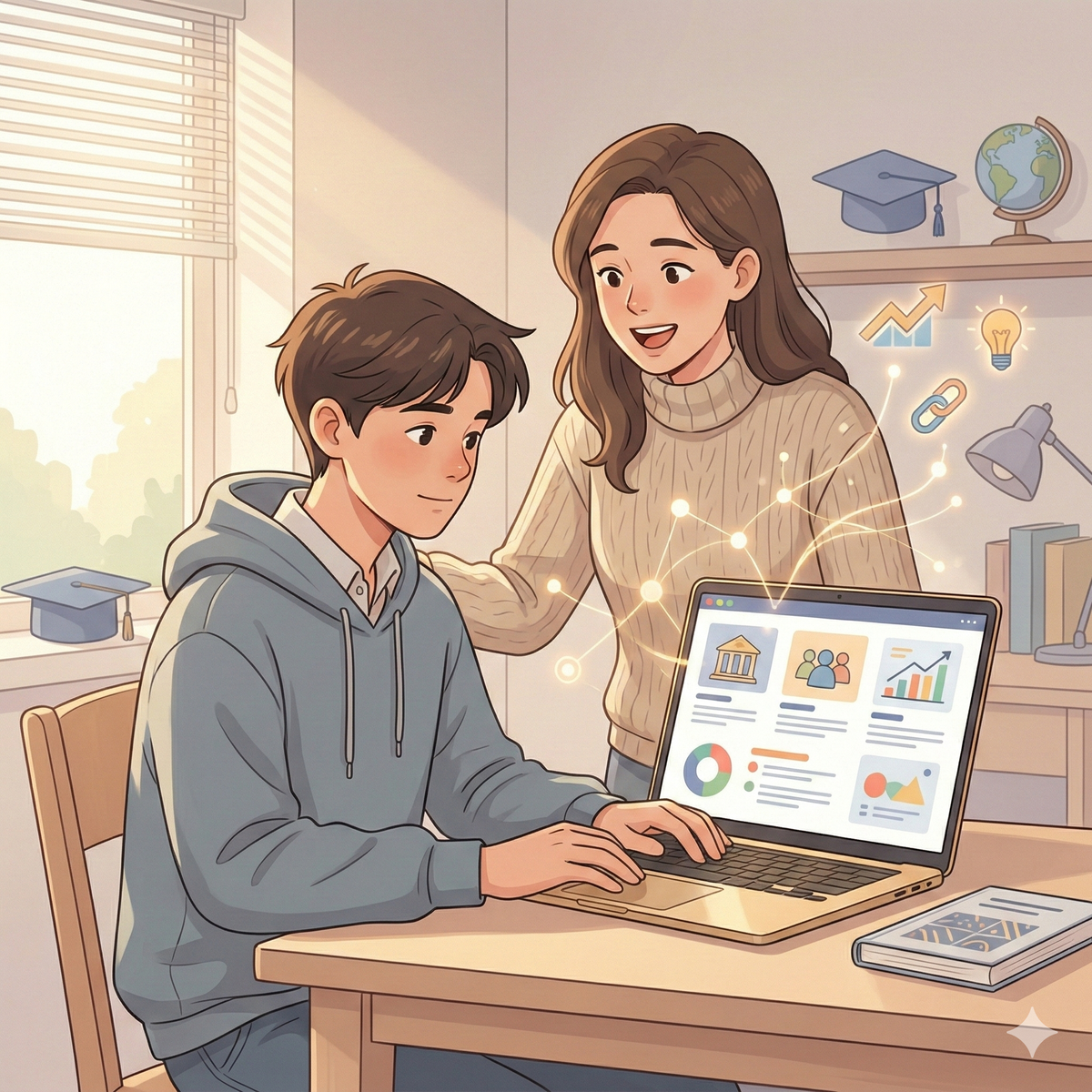
In the first part of our White House AI initiative series, we explored the Presidential AI Challenge — a nationwide effort to move K–12 students from passive users of AI to active innovators. But preparing for the future is more than one challenge or competition.
Across the nation, educators, policymakers, and industry partners are working to integrate AI literacy into the core of K–12 education and create new pathways that connect school with real-world opportunity.
No longer is the roadmap simply “get good grades → go to college.” Increasingly, students are earning industry-aligned certifications, apprenticeships, and dual-enrollment credentials alongside their high school diploma — often before graduation.
This is what the future of work looks like in 2026:
AI fluency plus demonstrable skills.
Why the “AI-Ready Workforce” Matters
The economic landscape is evolving fast.
• AI is reshaping how we work.
• Routine tasks are automated.
• Hybrid roles require both human judgment and AI fluency.
• Employers value proven capability as much as formal degrees.
In this new reality, students can no longer rely on memorization alone. They must show that they can navigate intelligent systems, ask the right questions, and integrate machine output into real tasks.
That’s where workforce-aligned learning — certifications, apprenticeships, and stackable credentials — comes in.
What “AI Literacy” Really Means in Schools
AI literacy isn’t just “how to type a prompt.” It includes the ability to:
• Understand how AI systems work
• Recognize bias and limitations
• Interpret data outputs correctly
• Apply AI within specific domains (science, language, design, etc.)
• Communicate results responsibly
This maps directly to the higher levels of the AI Fluency Ladder — where critical thinking and orchestration matter more than rote AI use.
New Pathways: Certifications Students Can Earn Before Graduation
In 2026, many school districts and education partners are promoting industry-recognized AI certifications that prepare students for college and careers.
Here are examples of the kinds of credentials students can now pursue — some of which are supported by major tech partners through educational initiatives:
1. AI & Machine Learning Foundations (Industry Certification Track)
Offered through partnerships between schools and online learning platforms, this certification focuses on:
• Basic AI/ML concepts
• Ethical frameworks
• Data interpretation
• Responsible use of generative models
Benefits: A strong credential for any AI-related college major or tech pathway.
2. Data Literacy & Analytics Certificate
Increasingly viewed as core AI literacy, this certification teaches:
• Basic statistics
• Data visualization
• Interpretation of AI model outputs
• Ethical data use
Benefits: Valuable across fields — business, science, health, engineering, and more.
3. AI in Applied Sciences (Project-Based Certification)
Students complete real projects that involve:
• Problem framing
• Solution design
• Responsible AI application
• Communication of results
This track blends technical work with domain knowledge.
Benefits: Demonstrates project execution and real-world problem solving.
4. Computational Thinking & Responsible AI Certificate
Rather than teaching coding alone, this credential emphasizes:
• Problem decomposition
• Structured logic
• Ethical decision frameworks
• Human-centered AI evaluation
Benefits: Prepares students for interdisciplinary careers where strategy matters.
5. AI Apprenticeship Pathways
Some districts now partner with local employers to offer:
• AI support apprenticeships
• Civic data internships
• R&D project assistant roles
These are not certificates per se, but industry-aligned experiences that carry real workforce value.
Benefits: Portfolio development, networking, experience over theory.
Note: Specific certification names may vary by state/district, and not all certifications are offered universally. Partnerships with platforms like Coursera, edX, community colleges, and local tech councils often provide access to stackable credentials.
Dual-Enrollment: A Bridge Between High School and College
Many forward-thinking districts now offer dual-enrollment AI coursework:
• Students earn high school + college credit
• Courses align with AI literacy frameworks
• No tuition required in many cases
• Parents and students benefit from early exposure to college-level expectations
This reduces barriers to post-secondary success and strengthens confidence.
What This Means for Parents
If your high schooler is beginning to think about career preparation, this shift matters:
• They can graduate with credentials — not just credits
AI literacy and data fluency can now be formally documented.
• They can build portfolios while still in school
Real projects are more convincing than grades alone.
• They can test career paths early
AI credentials help students explore fields before college major decisions.
• They can reduce the cost and time of college
Dual credits mean fewer requirements later.
How to Support Your Child
Parents can help their learner get ahead by:
✅ Exploring available certifications at their school
✅ Asking about AI-aligned dual enrollment programs
✅ Connecting AI projects to real outcomes (portfolio pieces)
✅ Encouraging structured prompting and critical reflection
✅ Pairing academic AI learning with real-world practice
These steps move AI fluency from “abstract skill” to “documented capability.”
Calm Perspective
This shift is not about replacing teachers or formal education.
It’s about layering demonstrable capability onto traditional learning.
Students who can show that they’ve completed real AI-aligned work will enter the future with confidence, not just a transcript.
What’s Next in the Series
Stay tuned for Part 3 — The Socratic Classroom, where we explore how AI-integrated teacher training is reshaping what learning feels like inside schools — and what that means for families at home.