The Answer Trap: AI Homework Help Dangers and the Hidden Risk to Your Child’s Critical Thinking
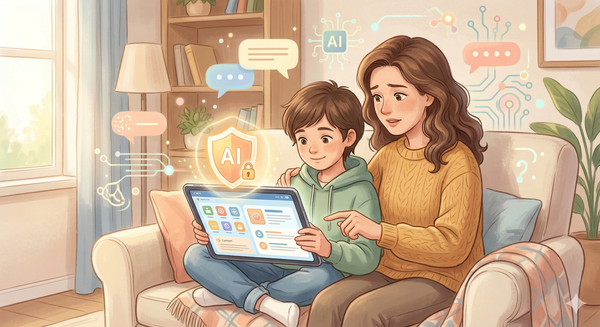
AI homework help isn’t just about cheating. It’s about something quieter — the gradual erosion of your child’s ability to struggle, think, and begin on their own. Here’s how the Answer Trap works — and how to stop it before it becomes a habit.


Your child just finished their essay in 11 minutes. It's well-structured. The grammar is perfect. The argument flows. You feel proud — until you ask them to explain their thesis out loud, and they can't.
That moment — quiet, easy to miss — is the Answer Trap.
It's not about cheating. It's not about laziness. It's about something more subtle and more dangerous: the slow, invisible erosion of the cognitive struggle that actually builds intelligence.
As AI tools become faster, more confident, and more fluent — available on every device your child touches — we are facing a parenting challenge that has no historical precedent. The same technology that can accelerate your child's learning can, if left unchecked, quietly outsource the one thing no tool can replicate: the experience of figuring something out yourself.
This article is about that challenge. What the science says. What the trap actually looks like at home. And what parents can do — tonight — to protect the one skill AI cannot give your child: the ability to think.
What the Research Actually Says About Struggle and Learning
Neuroscientists call it "desirable difficulty" — the counterintuitive idea that some friction in learning is not just acceptable, it's essential.
Robert Bjork at UCLA, one of the leading researchers on memory and learning, has spent decades demonstrating that the conditions under which we learn something most efficiently are often the conditions under which we retain it least. Speed and ease feel productive. But deep learning — the kind that transfers to new contexts and sticks over time — requires effort, error, and retrieval practice.
When a student struggles to remember a fact, formulate an argument, or work through a math problem, the brain engages in a process called memory consolidation. Neural pathways strengthen. Connections form. The effort of retrieval — even when it's slow and uncomfortable — is the mechanism of learning itself.
Now consider what happens when a child opens an AI tool and types their homework question.
The struggle disappears. The answer arrives. The neural pathway never fires.
The child has the answer. But they haven't learned anything. And more importantly — their brain has just received a signal: when something is hard, there is a faster way.
The Difference Between AI as a Scaffold and AI as a Shortcut
A scaffold helps a child reach higher than they could alone — and then comes down when it's no longer needed.
A shortcut gets you to the destination without ever learning the route.
The difference is invisible until the scaffold is removed. And in a world where AI is always available, the scaffold is never removed — unless parents build that boundary intentionally.
The 3 Stages of the Answer Trap (And How to Spot Each One)
The Answer Trap doesn't happen all at once. It moves in stages. And each stage looks, from the outside, like reasonable use of technology.
Stage 1: The Shortcut Stage
Your child uses AI to check answers, clarify a confusing concept, or fix a grammar error after completing their own draft. They're still doing the cognitive work. AI is a tool, not a crutch.
Stage 2: The Replacement Stage
AI generates the first draft. AI structures the outline. AI solves the first equation. Your child edits afterward.
This stage feels productive. The work is getting done. The quality looks good. But the brain has offloaded the hardest part — the beginning. And the beginning is where most learning happens.
Stage 3: The Cognitive Echo Stage
This is the trap itself.
Your child cannot begin without AI. They sit at a blank page and feel paralyzed. They describe feeling "blank" or "stuck" in a way that didn't happen before. They default to external thinking before they've attempted internal thinking.
The AI isn't supplementing their thinking anymore. It is their thinking.
The frightening part? Most families don't notice Stage 3 until a test, an interview, or a real-world moment strips the AI away — and the child has nothing left to reach for.
The Hidden Dangers of AI Homework Help Parents Aren't Talking About
Most conversations about kids and AI homework help focus on cheating — plagiarism, academic dishonesty, whether teachers can detect AI writing. These are real concerns. But they miss the deeper issue.
The most significant danger of AI homework help isn't that your child turns in work that isn't theirs. It's that your child gradually loses the ability to do the work themselves — and doesn't realize it until the stakes are high.
The Confidence Erosion Problem
Children who regularly outsource their first drafts to AI often report lower confidence in their own writing ability — even when their AI-assisted work is praised. Why? Because on some level, they know.
They know the A+ wasn't fully theirs. They know the argument they couldn't explain in class wasn't one they built. And over time, that gap between external performance and internal capability creates anxiety, not confidence.
We are raising a generation of children who may appear academically successful while quietly losing faith in their own minds. That is not preparation for the future. That is its own kind of crisis.
The Transfer Problem
Learning researchers distinguish between performance and learning. A child can perform well on a specific task — write a strong essay with AI help — without actually learning the underlying skill.
Transfer is the ability to take a skill learned in one context and apply it to a new one. It's what allows a student to write a college application essay about an unexpected topic, or to structure an argument in a job interview, or to draft a persuasive email when they're 27.
AI doesn't teach transfer. It bypasses the practice that makes transfer possible.
The Metacognitive Blindspot
Perhaps most troubling: children who over-rely on AI for thinking tasks often lose the ability to accurately assess what they know and don't know — a skill researchers call metacognition.
They feel confident because the AI delivered a good answer. But confidence built on borrowed thinking is not the same as confidence built on genuine understanding. The child who cannot distinguish between the two is the most vulnerable when the AI isn't available.
What the Answer Trap Actually Looks Like at Home
Because parents ask us this all the time: here are the real, everyday signs that your child may be sliding into AI dependency. These aren't dramatic warning signs. They're quiet ones.
- Your child opens a homework app before reading the assignment themselves
- They say "I don't know where to start" on tasks they would have attempted on their own 6 months ago
- When you ask them to explain their completed work, they struggle to articulate their own reasoning
- They express frustration or anxiety when asked to work without devices
- Their writing voice sounds like everyone else's — polished, structured, and curiously flat
- They describe AI as "doing homework" rather than "helping with homework"
- Their handwritten or verbal responses are notably weaker than their typed or submitted work
None of these signs alone is cause for alarm. But two or three together, especially if they've appeared recently, are worth taking seriously.
The Socratic Shift: Transforming AI from Shortcut to Thinking Partner
Here is the foundational principle at the heart of everything we teach at Toddy Bops AI:
The single most powerful shift you can make is teaching your child to change how they talk to AI.
Instead of: "Write me an introduction for my essay about the Civil War."
Teach them to say: "I'm writing about the Civil War. Don't give me the answer. Ask me one question at a time to help me figure out my own opening."
That one change transforms AI from an Answer Engine into a Socratic partner.
The child is still working. Still thinking. Still building the neural pathways that matter. But now AI is serving as a thinking coach rather than a thinking replacement.
This is the Orchestrator Mindset — the idea that your child should be directing the AI, not being directed by it. And it is a learnable skill. But it requires intentional practice at home.
The Prompt Shield: 3 Rules to Install at Home Tonight
You can't be present for every homework session. But you can install rules — what we call the Prompt Shield — that reshape how your child interacts with AI before you're in the room.
Rule 1: Think Before You Prompt
Before your child asks AI anything, they must write one sentence — by hand or in their own words — that captures what they think the answer might be, or what they already know about the topic.
This does two things: it activates prior knowledge (priming the brain for learning), and it establishes that the child's thinking comes first. AI responds to them — not the other way around.
Rule 2: The Socratic Command
Teach your child this exact prompt to use at the start of any AI-assisted homework session:
This single prompt changes the entire dynamic. AI becomes a tutor rather than an answer machine. The cognitive work stays with the child.
Rule 3: The Human Finish
The last 10% of any assignment must be human-only. No AI. No editing with AI. Just the child's own voice.
This could be:
- A personal story or memory that connects to the topic
- An original opinion written in their natural voice
- A hand-drawn diagram or sketch
- A question they still have after completing the work
This rule preserves authorship. It ensures that every piece of work your child submits contains a piece of their actual thinking — and that they know it does.
The Zero-Tech Audit: A 10-Minute Test You Can Do This Week
Want to know where your child actually stands? This is the most honest assessment available — and it requires no special tools.
This isn't a gotcha exercise. It's information. And most children, when met with curiosity rather than suspicion, will tell you exactly how they've been working — if you create the right conditions to ask.
The "Bad AI" Test: Teaching Kids to Critique Instead of Comply
One of the most powerful AI literacy exercises you can do at home costs nothing and takes 15 minutes.
Tell your child: "The AI is going to try to trick you. Find its mistake."
Then run a prompt together and — without telling them — give AI an instruction that includes a subtle error, a slightly wrong fact, or an incomplete answer. Ask your child to identify what's wrong.
A child who can find AI's mistakes is a child who is reading critically, thinking independently, and understanding that AI output is a starting point — not a final answer.
A child who accepts AI output without questioning it is a child who is one small step away from the Cognitive Echo Stage.
The Bad AI Test also gives children permission to distrust — which is exactly the habit we want them to build. In a world where AI will be generating content, recommendations, and arguments across every domain of their adult lives, the ability to interrogate rather than accept is not optional. It is essential.
What This Looks Like at Different Ages
The Answer Trap doesn't operate the same way for a 7-year-old and a 14-year-old. Here's a quick breakdown of what to watch for — and what to do — at different developmental stages.
Ages 5–8: The Foundation Years
Children this age are still building foundational cognitive habits — sitting with discomfort, trying before asking for help, tolerating the frustration of not knowing. AI use at this stage should be minimal and highly supervised. The most important thing you can model is the act of not knowing and figuring it out anyway.
Ages 9–12: The Habit Formation Window
This is the highest-risk window for the Answer Trap. Children are doing more independent homework, facing more academic pressure, and have increasing device access. This is when AI shortcuts become habitual. The Prompt Shield rules are most urgent here.
Ages 13–15: The Identity Stage
Teenagers are developing a sense of their own intellectual identity. If that identity is built on AI-generated output, the foundation is fragile. At this stage, the conversation shifts from rules to philosophy: What does it mean to think for yourself? What's the difference between using a tool and being used by one?
Ages 16+: The Orchestrator Window
By now, the goal is not to prevent AI use — it's to ensure your child is directing it with intention. High schoolers who understand the Orchestrator Mindset (directing AI rather than being directed by it) will enter college and the workforce with a genuine advantage.
The 7-Day Answer Trap Reset Plan
If you've recognized some of these signs in your own home, here's a structured reset you can begin this week. It requires no technology purchases, no special apps, and about 20 minutes of intentional parent attention each day.
- Day 1: Observe without correcting. Watch one homework session and note how your child interacts with AI. No intervention — just information.
- Day 2–3: Introduce the Socratic Command. Help your child install it as their default opening prompt for AI sessions. Practice it once together.
- Day 4: Run the Bad AI Test together. Make it playful, not corrective. Celebrate when they find the error.
- Day 5: Enforce the Human Finish rule for one assignment. Ask them to add one original sentence that is entirely their own.
- Day 6: Conduct the Zero-Tech Audit at dinner. Frame it as a conversation, not a quiz.
- Day 7: Have the bigger conversation. Ask your child what they think AI is good for — and what they think only humans should do. Their answers will tell you more than any test.
Small interventions, consistently applied, prevent long-term dependency. The goal is not to make AI the enemy. It is to make your child's mind the most powerful tool in the room.
The Children Who Will Thrive in an AI World
The children who thrive in an AI-driven economy won't be the ones who got the fastest answers. They will be the ones who knew when not to ask.
They will be critical thinkers. Strong communicators. Confident creators. Children who can start from nothing, struggle toward something, and finish with work that is genuinely, irreplaceably theirs.
That kind of child isn't created by the right app. They're built through the right habits — practiced in small moments, at kitchen tables, over homework that felt hard until it didn't.
The Answer Trap is real. But so is the way out.
And it starts with the next homework session.
Related Reading at Toddy Bops AI: