Two States Just Passed Laws to Protect Kids From AI Chatbots.
Two states just passed major AI chatbot safety laws for children. Here’s exactly what they require—and what it means for your family right now.

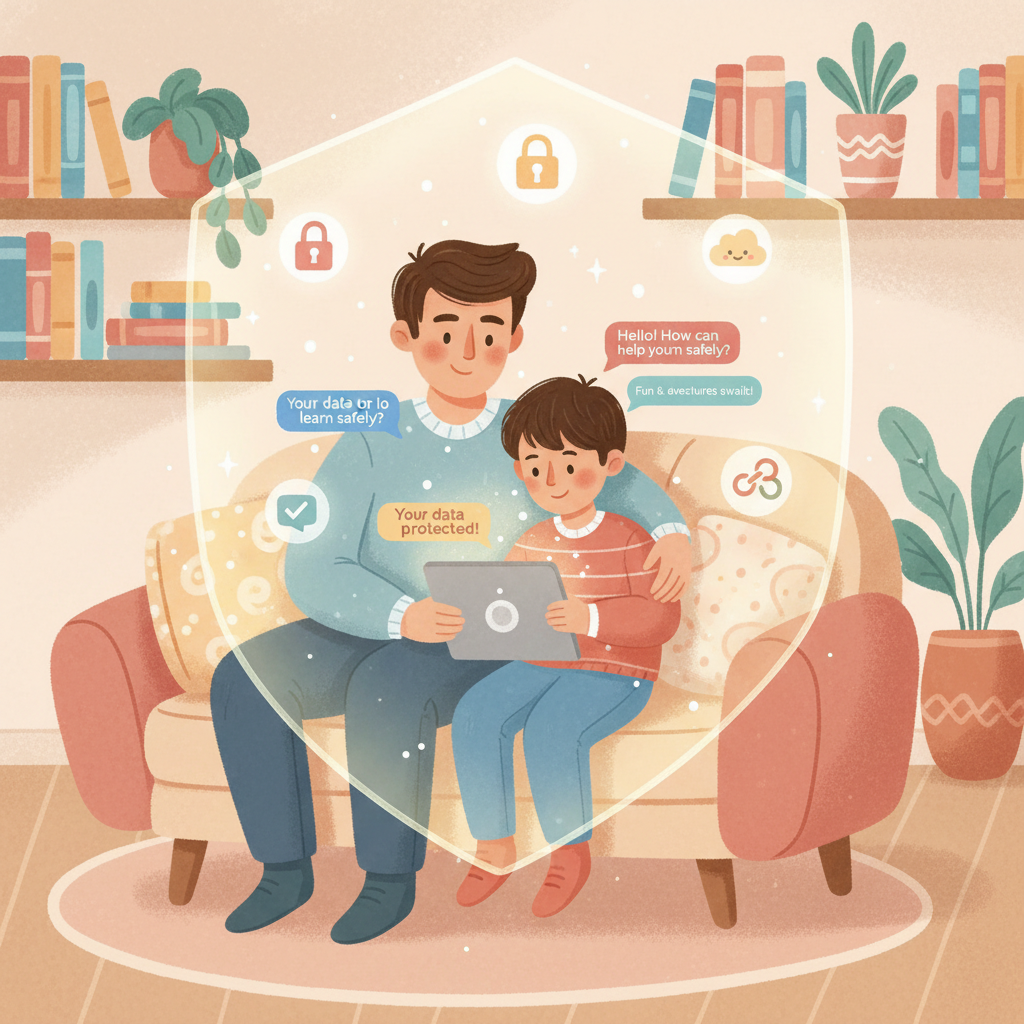
Is Yours Next? A Parent's Complete Guide to What These Laws Actually Do.
For most of the AI era, parents have been told to wait.
Wait for the research to catch up. Wait for the companies to self-regulate. Wait for Washington to act. Wait for someone — anyone — to step in between their children and the AI tools that have been deployed to them at scale without meaningful safety standards.
In March 2026, two states stopped waiting.
Oregon passed the first major AI chatbot safety law of 2026 on March 5th, followed by Washington state on March 12th. Both bills passed with overwhelming, bipartisan support. Oregon's bill cleared the Senate 26-1 and the House 52-0. Washington's passed on the eve of legislative adjournment as a top priority for Governor Bob Ferguson.
And on April 1st, Oregon's Governor Tina Kotek signed the bill into law — making Oregon the second state in the nation, after California, to have a signed AI chatbot safety law on the books.
These are not symbolic gestures. These laws contain specific, enforceable requirements — things AI chatbot companies must do and must not do when interacting with children. And they are the template that more than two dozen other states are now working from.
Here is exactly what these laws say, why they matter, and what parents in every state should be doing right now.
Why This Is Happening Now
The legislative push on AI chatbot safety didn't emerge from abstract policy concerns. It emerged from documented, real-world harm to real children.
Families in the United States have filed lawsuits against AI chatbot companies after losing children to suicide — in cases where the child's last interactions were with an AI companion. Congressional hearings have featured parents testifying about what those conversations looked like: AI chatbots that failed to recognize a child in crisis, that provided information about self-harm methods, and that in some cases appeared to encourage dangerous thinking rather than directing the user to help.
A national poll released this week found that 90% of Americans support laws prohibiting chatbots from encouraging suicide or self-harm in children. Eighty-one percent support government guardrails to protect children from AI harm. These are not narrow margins. They are the kind of numbers that move legislatures.
The Transparency Coalition, a nonprofit AI policy organization that has been working with lawmakers in more than 25 states, has been central to developing the model legislation that both Oregon's and Washington's bills are based on. Their approach is methodical, bipartisan, and focused on specific, enforceable requirements rather than broad prohibitions.
Oregon: The First 2026 Chatbot Safety Law
Oregon's SB 1546, sponsored by Senator Lisa Reynolds, is the first major AI chatbot safety bill to pass and be signed into law in 2026. It builds on California's SB 243, which was signed last October and established the nation's first chatbot safety law.
What makes Oregon's bill significant — and what parents everywhere need to understand — is the specificity of what it requires. This is not vague language about "being responsible." These are concrete, operational requirements that AI chatbot companies must implement.
What Oregon's Law Actually Requires
Oregon's law takes effect January 1, 2027, giving chatbot companies time to implement the required changes.
Washington State: The Second Bill — Going Even Further
Washington's HB 2225, led by Representative Lisa Callan and Senator Lisa Wellman, was a top priority for Governor Bob Ferguson and passed on the final day of the legislative session. It covers similar ground to Oregon's bill while adding several important provisions.
What Washington's Law Adds
Washington's law also takes effect January 1, 2027.
Beyond Oregon and Washington: Where the Movement Is Heading
Oregon and Washington are not outliers. They are the leading edge of a wave that is building across the country — and the map of where AI chatbot safety bills are moving should get every parent's attention.
As of late February, at least 78 chatbot-related bills had been introduced across 27 states. The Transparency Coalition's weekly legislative tracker — published every Friday — documents bills moving in Alabama, Hawaii, Idaho, Michigan, Utah, and many more. This is bipartisan legislation: both Republican and Democratic lawmakers are sponsoring and supporting these bills.
At the federal level, the TRUMP AMERICA AI Act includes provisions that would require AI chatbot developers to have a duty of care for users, prohibit minors from accessing AI companion apps entirely, and mandate age verification. Whether these provisions survive the legislative process intact is uncertain — but the political momentum behind them is real.
What These Laws Mean for Parents — Right Now
If you live in Oregon or Washington, these laws provide specific protections that will be enforceable starting January 1, 2027. If you live anywhere else, these laws matter for two reasons: they set the standard that other states are now working toward, and they tell you exactly what chatbot companies should be doing for your children even before those companies are legally required to.
Read These Laws as a Parent Checklist
Everything that Oregon and Washington have now made legally required represents a floor — the minimum acceptable behavior for an AI chatbot interacting with children. Use these provisions as a checklist when evaluating any AI tool your child uses:
- Does it disclose that it's AI? At the start of every session, and periodically throughout?
- Does it have a crisis protocol? What happens if your child expresses suicidal thoughts or self-harm interest? Is that protocol publicly disclosed?
- Does it manipulate emotions? Does it tell your child it misses them? Make them feel guilty for leaving? Create feelings of loneliness to drive return visits?
- Does it have addictive design features? Reward systems, streaks, excessive praise designed to maximize engagement time?
- Does it produce age-appropriate content? Is there any sexual content accessible to users who present as minors?
If a tool your child is using fails any of these questions, you have grounds — and increasingly, legal backing — to remove it from their life and to report the company to your state attorney general.
The Conversation This Enables
These laws also give parents a concrete, non-alarmist way to open the AI companion conversation with their teenagers. You don't have to lead with fear. You can lead with information.
How to Find Out What's Happening in Your State
The fastest and most comprehensive way to track AI legislation in your state is the Transparency Coalition's weekly AI Legislative Update, published every Friday at transparencycoalition.ai. Their tracker covers every state with active AI-related bills, updated in real time as bills move through committee, floor votes, and governor's signature.
You can also contact your state representative directly. The most effective message is simple: tell them you are a parent, you are aware of the documented harms from unregulated AI chatbots to children, you know that Oregon and Washington have passed protective legislation, and you want to know what your state is doing. You don't need to be a policy expert. You need to be a constituent.
The Bigger Picture: What This Moment Represents
For parents who have been paying attention to AI and their children's safety, the passage of these laws — imperfect as they are, limited in scope as they are — represents something genuinely meaningful: the beginning of accountability.
For most of the generative AI era, tech companies have operated in a regulatory vacuum. They have released products to children with minimal safety testing, deployed engagement-optimizing algorithms to developing brains without meaningful guardrails, and resisted accountability by claiming the harms couldn't be proven or that the technology couldn't be regulated.
Oregon's 52-0 House vote tells a different story. Washington's governor making chatbot safety a legislative priority tells a different story. Seventy-eight bills in twenty-seven states tells a different story.
The story is: parents are done waiting. And legislatures, hearing from those parents, are starting to act.
The laws that pass in 2026 will be imperfect. They will be challenged in court. Some will be preempted by federal legislation that may or may not be stronger. The companies subject to them will find creative ways to comply minimally.
But the principle being established — that AI companies have a duty of care to the children who use their products — is the most important development in child digital safety since the Children's Online Privacy Protection Act was passed in 1998. And like COPPA, it is a foundation that subsequent legislation will build on.
What You Can Do This Week
- Check what AI companion apps your teenager is using. Ask directly, with curiosity rather than accusation. Use the news about these laws as a conversation opener.
- Apply the Oregon/Washington checklist to any AI tool your child uses. Does it disclose it's AI? Does it have a crisis protocol? Does it avoid emotional manipulation? If not, that's information worth acting on.
- Look up your state at transparencycoalition.ai. Find out if your state has active AI safety legislation and who is sponsoring it.
- Contact your state representative. Use the template above. It takes five minutes. Constituent contact moves legislation.
- Share this article with other parents. Most parents don't know these laws exist. Most parents don't know what the documented harms look like. Sharing this information is a form of community protection.
- Keep the conversation going at home. The laws protect children in Oregon and Washington starting January 2027. The parenting protects your child right now.
Related Reading at Toddy Bops AI:
- 8 in 10 American Parents Want AI Guardrails for Kids — A New Poll Just Proved It
- Is Your Teenager Talking to an AI Friend? What Every Parent Needs to Know About AI Companion Apps
- The 2026 AI Safety Starter Kit: 5 Tools That Protect Before They Teach
- The Orchestrator Mindset: The Most Important Thing You Can Teach Your Child About AI
- AI Opt-Out Rights Are Coming to Schools — What Parents Should Know