When Convenience Becomes Control: Are We Letting AI Parent Our Kids?
Is AI quietly replacing parental judgment in your home? As smart assistants become more predictive and persuasive, families must rethink who is truly leading decisions. Learn how to use AI without surrendering authority.

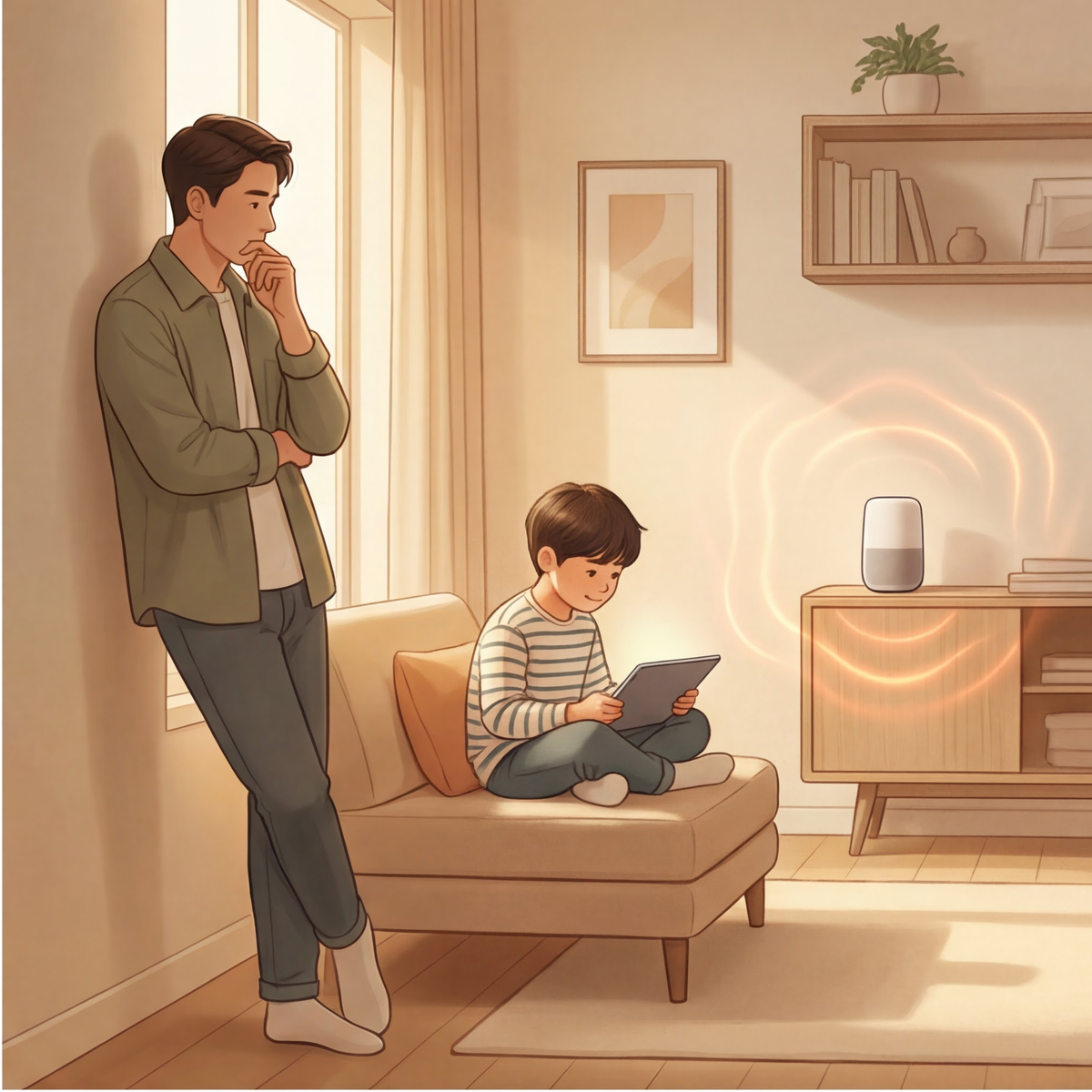
AI is becoming the quietest member of the household.
It reminds your child about homework.
It answers their questions.
It suggests what to watch.
It corrects their grammar.
It soothes their boredom.
At first, it feels like relief.
Modern parenting is overwhelming. The mental load is heavy. And AI offers something irresistible:
Efficiency.
But here’s the question very few parents are asking:
At what point does assistance become influence?
We are not just handing AI small tasks. We are allowing it to shape our children’s habits, preferences, learning styles, emotional patterns, and even their self-perception.
And most of this is happening invisibly.
We’ve already explored how AI can create the Answer Trap, where children stop wrestling with problems and start outsourcing thinking.
But there’s a deeper layer emerging:
When AI becomes the default voice in your child’s decision-making process.
That’s where convenience quietly becomes control.
The Invisible Authority Shift
Children naturally trust confident voices.
AI tools are designed to sound:
• Fluent
• Certain
• Calm
• Helpful
Even when they are wrong.
When a child asks:
“What should I do?”
“What’s the best way?”
“Is this right?”
And the machine answers instantly, it creates a subtle authority hierarchy.
The AI becomes the fastest authority in the room.
And speed often wins.
This doesn’t mean AI is harmful. It means authority is being redistributed — from parent and teacher to algorithm.
If we don’t actively design the relationship, the algorithm designs it for us.
The 3 Ways AI Quietly Starts Parenting
1. Decision Delegation
When children begin asking AI what to wear, what to say, how to respond to friends, or how to feel about a situation, they are slowly outsourcing judgment.
Judgment is built through:
• Trial
• Mistakes
• Reflection
• Consequences
AI removes friction — and friction is where wisdom forms.
The risk isn’t dependence on answers.
The risk is dependence on direction.
2. Emotional Regulation Outsourcing
AI companions are designed to validate.
They rarely disagree.
They rarely challenge.
They rarely create emotional discomfort.
But discomfort is essential for growth.
If a child begins venting to AI instead of learning to:
• Sit with discomfort
• Resolve conflict
• Negotiate disagreement
• Repair relationships
Then AI becomes a substitute for emotional development.
It feels supportive.
But it can quietly limit resilience.
3. Algorithmic Habit Formation
AI tools track patterns:
• What your child searches
• What they struggle with
• What they enjoy
• What they avoid
Over time, AI starts anticipating needs.
This feels magical.
But prediction can turn into persuasion.
When recommendations shape:
• Study habits
• Content exposure
• Creative style
• Social tone
We have to ask:
Who is designing the developmental environment?
You — or the algorithm?
The Boundary Reset: Reclaiming Parental Authority
The solution is not panic.
The solution is structure.
Here are three practical boundary shifts every family can implement immediately:
1. The “Ask Yourself First” Rule
Before your child asks AI for help, they must answer the question themselves first.
Even one sentence.
This keeps cognitive authority anchored internally.
2. The “Human Check-In” Standard
If the decision affects:
• Emotions
• Relationships
• Identity
• Values
It must go through a human conversation before AI input.
AI can assist with math.
It should not define morality.
3. The “Design the Tool” Mindset
Teach your child that AI is not a boss.
It is a tool.
And tools require instruction.
Shift language from:
“What does AI say?”
To:
“How do we want to use this tool?”
That small language change preserves psychological control.
The Bigger Question
AI will absolutely be part of your child’s world.
That is not optional.
But parental influence is not obsolete.
It simply must become intentional.
The families who thrive in the AI era will not be the ones who ban technology.
They will be the ones who design boundaries early.
AI should amplify parenting — not replace it.
Final Thought
Convenience feels harmless.
Until it quietly becomes control.
AI will absolutely shape your child’s world.
But your influence still shapes how they interpret it.
The goal isn’t to remove AI from the home.
It’s to remain the architect of how it’s used.
What To Do Next
Now that you understand how AI influence can quietly shift authority inside the home:
• Revisit the AI “Answer Trap” framework and implement the Socratic Command this week.
• Review your current household AI tools and identify where decisions may be getting outsourced.
• Start drafting a simple “Family AI Agreement” that defines when AI assists — and when humans lead.
Inside the Toddy Bops AI Lab, we’ll soon release printable boundary frameworks and structured conversation guides for families navigating this shift.
Keep an eye on your inbox for early access.
You’re not behind.
You’re early.