Why “Human-Centered AI” Is Becoming the New Gold Standard in Education
Human-centered AI is reshaping education. Here’s why schools are prioritizing reflection and connection over automation — and what it means for your family.

For the past two years, the conversation around AI in schools has sounded dramatic.
Will AI replace teachers?
Will students stop thinking?
Is homework even real anymore?
But something interesting is happening inside universities and forward-thinking schools.
The conversation is shifting.
The focus is no longer:
“What can AI do?”
It’s becoming:
“How should AI be used — and who stays in control?”
This shift has a name.
It’s called Human-Centered AI.
And it may quietly become the most important educational philosophy of the next decade.
What Is Human-Centered AI?
Human-centered AI doesn’t ask how powerful the technology is.
It asks:
Does this tool enhance human thinking — or replace it?
In education, this means:
• AI assists reflection, not shortcuts
• AI expands understanding, not dependency
• AI supports teachers, not substitutes them
• AI increases access without removing accountability
It’s the difference between:
“Here’s the answer.”
And:
“Let’s think through this together.”
Why Schools Are Rethinking Automation
Early AI adoption in classrooms focused on efficiency.
Auto-grading.
Auto-summarizing.
Auto-writing.
Auto-feedback.
It saved time.
But educators began noticing something important:
When AI removes all friction, it can also remove growth.
Learning requires:
Struggle.
Curiosity.
Iteration.
Dialogue.
Human-centered AI reintroduces that friction — intentionally.
Instead of replacing thinking,
it scaffolds thinking.
Students Are Asking for Connection — Not Just Tools
One of the most powerful signals coming from higher education is this:
Students don’t want AI to think for them.
They want AI to help them think better.
They want:
• Different explanations
• Reflective prompts
• Thought-partner feedback
• Ethical guardrails
But they still want teachers.
They still want discussion.
They still want to be seen.
This is critical for parents to understand.
Even AI-native students are not asking for replacement.
They’re asking for augmentation.
What This Means for Families
If universities are moving toward human-centered AI,
families should too.
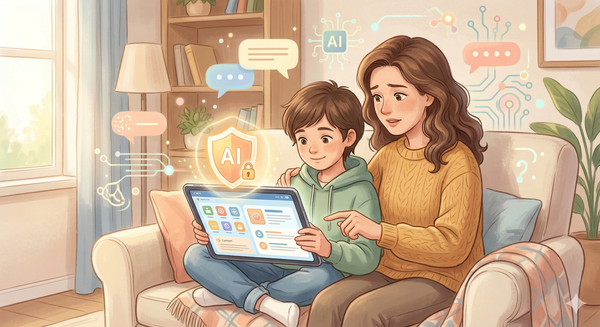
At home, this looks like:
Instead of:
“Use ChatGPT to finish your homework.”
Try:
“Use AI to brainstorm ideas — then refine them yourself.”
Instead of:
“Ask the bot what the answer is.”
Try:
“Ask the bot to challenge your thinking.”
Human-centered AI starts at the kitchen table.
The 3 Principles of Human-Centered AI at Home
1. AI as a Thought Partner, Not an Answer Engine
Teach your child to use prompts like:
“Don’t give me the answer. Ask me one question at a time.”
This preserves cognitive growth.
2. Human Finish Rule
The final 10–20% of any assignment should be fully human:
• Personal story
• Opinion
• Drawing
• Reflection
AI assists.
Humanness concludes.
3. Accountability Over Convenience
Convenience is seductive.
But accountability builds competence.
If your child can’t explain how they arrived at an answer,
they didn’t learn it.
They outsourced it.
The Bigger Picture
Human-centered AI is not anti-technology.
It’s pro-human.
The schools and institutions that thrive in the next decade won’t be the ones with the most automation.
They’ll be the ones that:
Preserve curiosity.
Protect reflection.
Maintain human connection.
AI is powerful.
But intelligence is still human.
And the families who understand this early
will raise children who don’t fear AI — and aren’t controlled by it.
They’ll command it.